
 Skip to content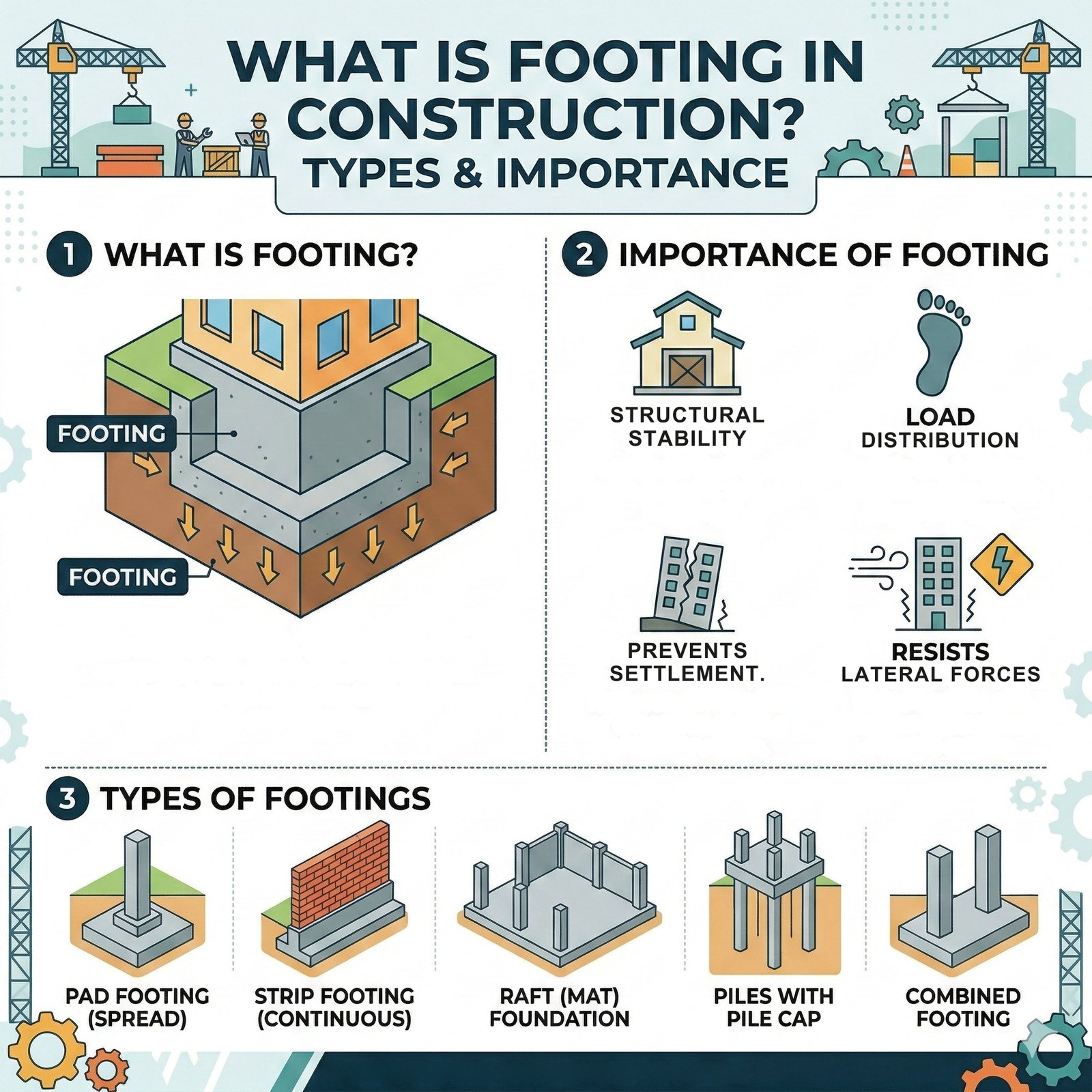
Before you see walls, columns, and slabs, there is one critical element working silently underground — the footing. It is the first structural component built after excavation and plays a major role in the strength and stability of your home.
If you are planning residential construction in Bangalore, understanding footing types and their importance will help you make informed decisions and avoid costly structural problems.
This guide explains what footing is, why it matters, and the different types used in house construction.
Footing is essential because it:
Distributes structural load evenly
Prevents settlement and tilting
Enhances building stability
Reduces risk of cracks
Improves long-term durability
In Bangalore, soil types vary:
Red soil
Clay soil
Mixed soil
Filled land
Soil testing helps structural engineers decide:
Footing size
Depth
Reinforcement details
Type of foundation required
Proper footing design always depends on soil bearing capacity.
Isolated Footing (Most Common)
Combined Footing
Strip Footing (Wall Footing)
Raft (Mat) Foundation
Pile Foundation (For Weak Soil)
Due to rapid urban expansion in Bangalore:
Some areas have filled land
Soil types vary even within the same locality
Multi-floor homes are common
Proper footing ensures structural safety and long-term durability in such conditions.
While constructing houses in Bangalore:
Ensure operators are trained
Regularly inspect equipment
Keep children & public away
Maintain safe distance from heavy machinery
Never allow untrained workers to operate machines.
Skipping soil testing
Reducing footing depth to save money
Using low-grade concrete
Ignoring curing process
Changing structural design on-site
Footing is the backbone of your home’s foundation. While it remains hidden underground, its strength determines how long your house will stand strong and crack-free.
If you are planning house construction in Bangalore, ensure proper soil testing, structural design, and quality footing execution.
Strong footing = Strong foundation = Strong home.