
 Skip to content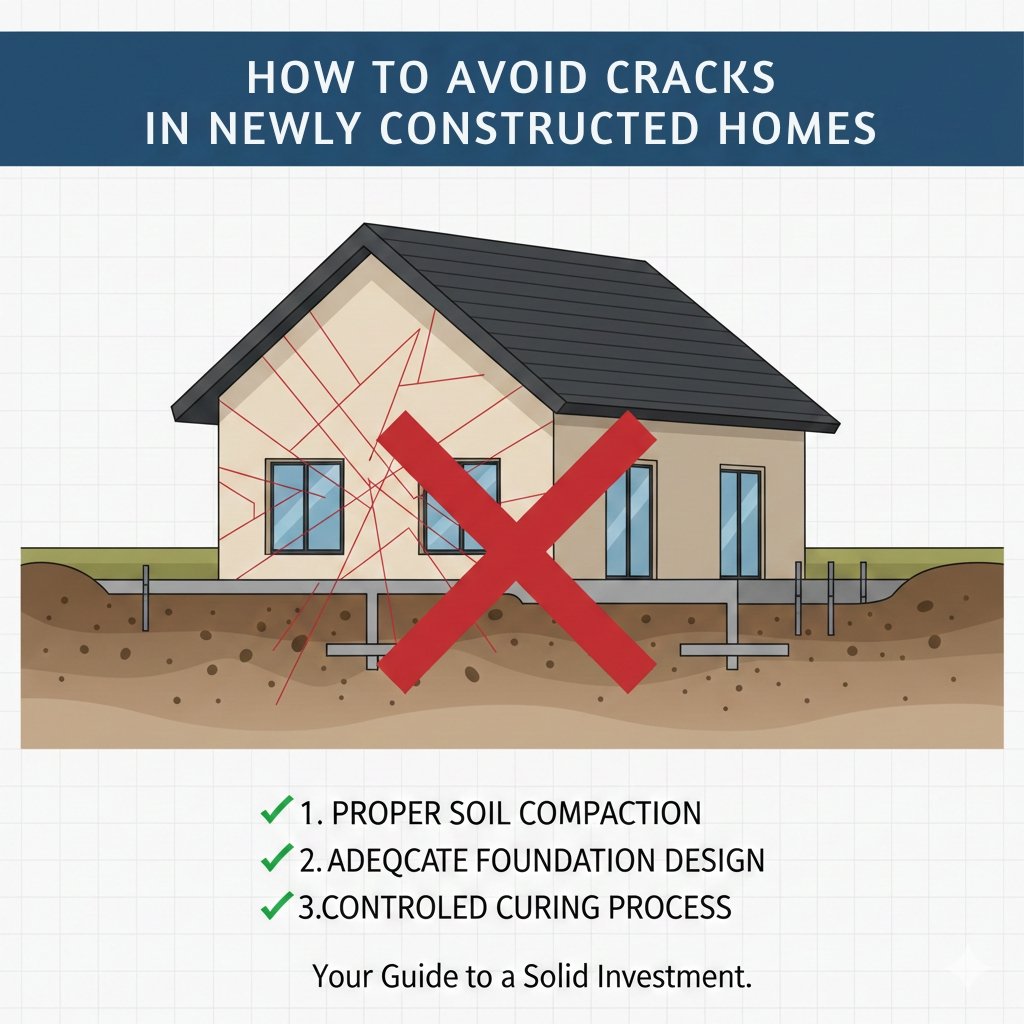
Cracks appearing in a newly constructed home can be alarming for homeowners. While some cracks are minor, others may indicate deeper construction or structural issues. The good news? Most cracks are preventable with proper planning, material quality, and execution.
If you are planning or have recently completed house construction in Bangalore, this guide explains the common causes of cracks and how to avoid them effectively.
Soil testing helps determine:
Soil bearing capacity
Foundation depth
Suitable foundation type
In Bangalore, soil conditions vary widely — red soil, mixed soil, and filled land are common. Skipping soil testing increases the risk of cracks.
Wrong foundation type leads to stress on walls and columns.
Follow structural engineer’s design
Avoid shallow foundations on weak soil
Use pile or raft foundation where required
Proper foundation design distributes load evenly and prevents structural cracks.
Low-quality materials lead to early cracks.
Use correct cement grade
Ensure proper sand quality
Use tested steel reinforcement
Maintain correct concrete mix ratio
Never compromise on material quality to reduce short-term costs.
Improper curing is one of the most common causes of cracks in new homes.
Slabs & beams: Minimum 14 days
Columns: Minimum 7–10 days
Brickwork: At least 7 days
Skipping curing leads to shrinkage cracks.
Rushing construction can cause:
Structural stress
Improper load transfer
Settlement cracks
Allow adequate time between:
Foundation & superstructure
Floor levels
Plastering & painting
Patience during construction prevents long-term defects.
7. use proper plastering techniques
Plaster cracks are common but avoidable.
Use correct sand–cement ratio
Avoid excessive water
Apply uniform thickness
Cure plaster properly
Cracks in newly constructed homes are largely preventable with proper planning, quality construction, and professional supervision.
If you are planning residential construction in Bangalore, focusing on soil testing, structural design, curing, and workmanship will ensure a strong, crack-free home for decades. Good construction practices today = Peace of mind tomorrow.